Why Healthcare Needs Partners, Not Just Suppliers
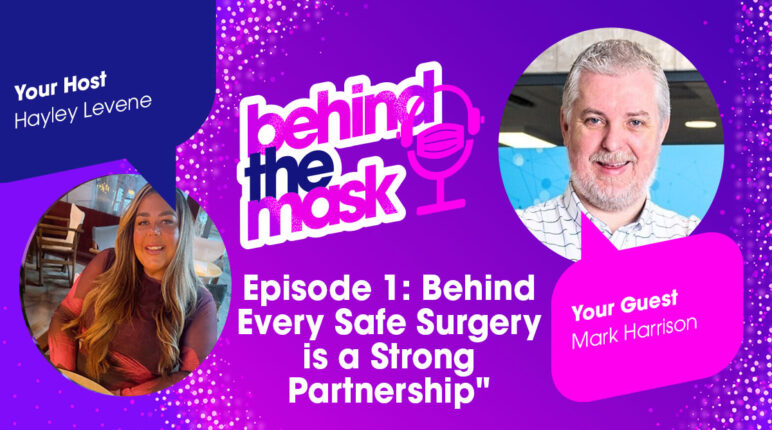
Key insights from Behind The Mask Episode 1 with Mark Harrison
There’s a uncomfortable truth in healthtech that nobody wants to admit: most supplier relationships are transactional theatre. Companies talk about partnership in their marketing materials, but when it comes down to it, the relationship ends at implementation. You get the software, maybe some basic training, and a support email address. Good luck.

The Hidden Heroes of Surgical Care
During our first Behind The Mask episode, Mark Harrison, Athera’s Director of Client Services, made an observation that got us thinking. He talked about how the teams we support… Decontamination staff, sterile services professionals, endoscopy specialists, are so good at their jobs that they’ve become invisible.
They process millions of instruments every year across the UK. Every single item represents a potential risk to patient care. Yet because these teams are so competent, so meticulous, so dedicated, they rarely appear on a hospital executive’s risk radar.
Until something goes wrong.
Athea’s CMO, Hayley Levene shared a personal story during our conversation. A close friend lost her mother to sepsis following what should have been a routine operation. An infection from surgery that was missed, that escalated, that ultimately proved fatal. She was far too young. And this isn’t an isolated incident – it happens across the NHS more often than anyone wants to acknowledge.
The work of decontamination and sterile services teams directly impacts these outcomes. The instruments used in every procedure must be properly decontaminated, sterilised, and validated as fit for purpose.
So why aren’t we talking about it more?
“They are so hidden and they are so hidden because they're doing such a good job that it's very difficult to highlight someone that's doing such a good job and reward them. ”
Mark Harrison
Director of Client ServicesAthera Healthcare
“We've got people that are processing the best part of 10, 12, 20 million items a year. Every single item that's processed is a potential risk to patient care. So why isn't it considered that way? ”
Director of Client ServicesAthera Healthcare
The Partnership Difference
Mark made a distinction that every healthcare leader should understand: suppliers deliver products. Partners deliver outcomes.
A supplier mindset looks like this: “Here’s the software you purchased. Here’s basic training. Call support if you have issues.”
A partnership mindset looks like this: “What are you trying to achieve? What keeps you awake at night? How can we help you become the hero in your organisation?”
True partnerships start before the sale. They begin with listening. Understanding the customer’s workflows, constraints, pain points, and goals. Not presenting solutions, but having discussions about how others have met similar challenges. Building transparency and trust with every interaction.
Then comes implementation – but not as a one-off project. As the beginning of a relationship. Discovery calls with technical teams. Documented scope of works. Clear expectations and responsibilities on both sides. Introduction to customer success managers who have actually worked in sterile services, who understand the sector because they’ve walked in those shoes.
And crucially, partnerships don’t end when the system goes live. They evolve.
The Scan for Safety Gap
Mark shared something that perfectly illustrates how invisible these teams have become. The Scan for Safety initiative is transforming how patient data is captured in surgical settings – recording the implant, the procedure, the theatre, the practitioners involved. Every element gets its own unique barcode as part of the patient record.
Except one.
There’s no barcode associated with the instruments that have been decontaminated, sterilised, and brought to the operation. No verification in the patient record that these tools are fit for purpose. The surgical tray appears in the imagery, but not in the data.
These teams are doing such an exceptional job that they’ve been taken for granted. And that’s dangerous.
Because doing too good a job shouldn’t mean you stop being recognised, resourced, and supported. It shouldn’t mean you become invisible until an incident forces you back into view – usually when there’s reputational damage, compensation costs, or worse.
What Partnership Actually Looks Like
At Athera, we’re trying to change this. Over the past year, Mark has been building a client services team structured around genuine partnership:
Customer Success Managers who work with customers daily, who have deep sector experience, who become the first point of contact when someone has a question or concern.
Training specialists who understand that people learn in different ways, who are building self-serve knowledge bases alongside traditional training, who focus on methodology rather than just features.
Project managers who bring sector knowledge and can translate customer needs into implemented solutions that deliver value quickly.
Support teams experienced in the sector who can solve problems efficiently because they understand both the product and the environment it operates in.
But more than structure, it’s about mindset. It’s about asking customers how the product can improve rather than assuming you know best. It’s about regular check-ins and outcome reviews. It’s about committing to continual improvement and co-innovation.
It’s about making your customers the heroes, not yourself.
The Business Case for Partnership
Here’s the part that matters to executives: It’s commercially smart.
When you invest in understanding your customers, when you deliver exceptional service consistently, when you help them achieve their goals rather than just selling them software – they tell other people. They renew contracts. They expand implementations. They become advocates.
But more importantly, you actually help them deliver better patient care. You surface data that helps them identify trends and training opportunities. You streamline processes that create efficiencies. You enable the kind of continuous improvement that prevents incidents rather than just responding to them.
Mark mentioned that Athera is developing new analytics and reporting capabilities specifically designed to surface insights from the data already being collected. Not just static reports showing how many instruments were processed, but trend analysis that helps identify where extra training might be needed, where kit shortages are creating bottlenecks, where non-conformances suggest systemic issues.
This is what partnership enables. You can’t innovate in the right areas if you don’t understand what your customers are trying to achieve.
A Call to the Industry
The healthtech industry needs to stop using “partnership” as a marketing buzzword and start building it into operations.
That means investing in customer success teams with real sector experience. It means building training programs that recognise how people actually learn. It means creating feedback loops that drive product innovation. It means staying with customers beyond implementation, through their entire journey.
And it means recognising that the technology is just an enabler. Software doesn’t replace teams or fix problems on its own. It empowers people to do their jobs properly, to meet regulatory requirements, to capture data that drives improvement, to deliver better patient outcomes.
The people using our products – the decontamination technicians, the sterile services managers, the endoscopy staff, theatre managers – are the real heroes. Our job is to give them the tools and support they need to shine.
Behind The Mask
This is why we launched Behind The Mask. Because these conversations matter. Because the people doing this critical work deserve a platform. Because surgical excellence is a team achievement, and every role matters.
If you work in healthcare and have insights to share, we want to hear from you. If you’re passionate about improving surgical pathways and patient outcomes, let’s talk. If you have stories that highlight the incredible work happening behind the scenes every day, we’ll help you tell them.
Because behind every mask is a person. Behind every procedure is a team. And behind every successful outcome is a partnership built on trust, expertise, and genuine care.
Watch Episode 1 of Behind The Mask to hear the full conversation with Mark Harrison. Subscribe to make sure you don’t miss future episodes. And if you’re a healthcare professional who wants to be featured, reach out— – we’d love to have you.
Behind The Mask is available on YouTube, with new episodes launching monthly.
Book a Demo
Arrange a one-to-one demonstration with a member of our dedicated team. We collaborate to tailor the experience so you can see how our solutions can be applied in your specific context and utilised effectively to achieve your objectives.